Hardwood Floor Resurfacing Services – Wood Floors ReNU
Hardwood floor refinishing in Medford generally costs about $3 to $8.50 per square foot, although the actual price depends on the condition and size of the floor, preparation, repairs, stain, finish and restoration method. A smaller or heavily damaged project can cost more per square foot, while a larger straightforward project may have a lower effective rate.
If you are budgeting for hardwood floor restoration, it helps to think of the per-square-foot number as a starting point rather than a final quote. Two Medford homes with the same amount of hardwood can have very different project costs if one needs simple finish renewal and the other requires repairs, extensive sanding or a color change.
What Is the Typical Cost to Refinish Hardwood Floors in Medford?
For planning purposes, homeowners in Medford can use approximately $3 to $8.50 per square foot as a broad starting range for professional hardwood floor refinishing. Published Oregon cost guidance currently places Medford around this range, while national 2026 hardwood floor resurfacing cost guides commonly place professional refinishing at approximately $3 to $8 per square foot. These figures are useful for budgeting, but they should not be treated as a guaranteed local price because every floor has different preparation and restoration requirements.
For example, if you have 500 square feet of hardwood, a rough planning range based on $3 to $8.50 per square foot would be about $1,500 to $4,250. A 1,000-square-foot project could fall around $3,000 to $8,500 using the same planning range. The actual estimate could fall outside those numbers if the project involves significant board replacement, difficult access, unusual flooring, extensive preparation or other conditions that increase labor.
The important distinction is that refinishing and resurfacing are not always the same scope of work. A floor that only needs its protective finish refreshed may require substantially less work than a floor that must be sanded, repaired, stained and completely refinished.
What Is Included in a Hardwood Floor Refinishing Price?
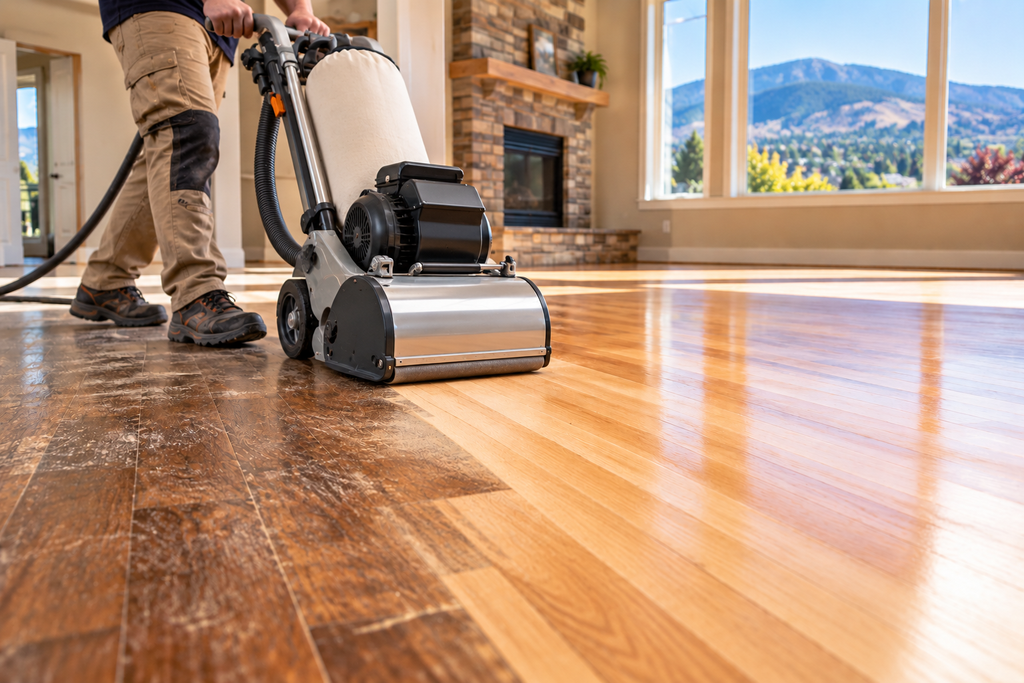
A professional hardwood floor refinishing project usually involves much more than simply applying a new finish. The contractor has to evaluate the existing floor, prepare the work area, determine how much surface preparation is necessary, perform the appropriate restoration work and apply the selected protective finish.
Floor Inspection and Preparation
The first step is determining what the floor actually needs. A professional should look at the condition of the existing finish, scratches, dents, discoloration, damaged boards, gaps and other visible issues before recommending a restoration method.
Preparation can also involve protecting adjacent areas, moving or coordinating furniture, addressing contaminants and preparing the floor so the new finish can bond properly. A floor that needs extensive preparation will generally require more labor than one that is already in relatively good condition.
Sanding and Surface Restoration
Full refinishing may involve sanding through progressively finer stages to remove the existing finish and prepare the wood for staining or a new protective coating. The amount of sanding required depends on the condition of the floor.
Light surface wear is very different from deep scratches, old coatings, discoloration or uneven areas. The more preparation the floor requires, the more time and labor can be involved.
Staining and Color Changes
Staining is another factor that can change the final project price. If you simply want to restore the existing appearance, staining may not be necessary. If you want to move from a light natural tone to a darker color, change the overall appearance of the room or coordinate the floor with a remodeled interior, additional preparation and stain work may be required.
Color changes can be particularly important because the existing floor has to be prepared appropriately before a new color is applied.
Protective Finish
The final finish protects the restored floor and contributes to its appearance. Different finishing systems have different material costs and application requirements.
A homeowner comparing estimates should ask what type of finish is included rather than comparing only the total dollar amount. Two estimates may appear similar while including different products, preparation levels or finishing specifications.
How Much Does 500 or 1,000 Square Feet Cost?
Square footage is one of the easiest factors to understand, but it should not be used as the only pricing consideration.
Using the broad Medford planning range of $3 to $8.50 per square foot:
| Hardwood Area | Rough Planning Range |
| 250 sq. ft. | $750–$2,125 |
| 500 sq. ft. | $1,500–$4,250 |
| 750 sq. ft. | $2,250–$6,375 |
| 1,000 sq. ft. | $3,000–$8,500 |
| 1,500 sq. ft. | $4,500–$12,750 |
| 2,000 sq. ft. | $6,000–$17,000 |
These are budgeting examples only, not Wood Floors ReNU pricing. Published cost guides emphasize that project size, floor condition, wood species, labor, repairs, staining and finishing choices can all change the final price.
Large projects can sometimes have a lower effective cost per square foot because setup, equipment and mobilization costs are spread over more flooring. A very small project, by contrast, may still require substantial setup and labor even though the total square footage is limited.
Why One Medford Floor Can Cost More Than Another
Floor Condition
The condition of the hardwood is one of the biggest variables. A floor with a worn finish but structurally sound boards may require less work than one with deep scratches, stains, damaged sections or other problems.
Repairs
Damaged boards may need to be repaired or replaced before the floor can be fully refinished. If only a few boards are affected, localized repair may make sense. More extensive damage can add labor and materials.
Layout and Accessibility
A simple rectangular room is generally easier to work in than a floor with many small rooms, tight corners, transitions, stairs or areas that require additional hand work. Published refinishing guidance also identifies edge work and difficult areas as factors that can increase labor.
Finish and Stain Selection
A straightforward clear finish is a different project from sanding, applying a custom stain, allowing appropriate drying time and applying multiple protective coats.
Dust-Control Requirements
Some homeowners specifically want a dust-conscious or dustless approach. Dustless systems use professional dust-containment equipment and can carry a higher cost than conventional refinishing. Current 2026 cost guidance places dustless refinishing around $5 to $8 per square foot nationally, although local pricing varies.
Resurfacing, Recoating or Full Refinishing: Which Do You Need?
Not every worn-looking hardwood floor needs complete sanding.
A screen and recoat may be appropriate when the wood is still in good condition but the existing protective finish has become dull or lightly worn. It focuses on preparing the existing finish and applying a new protective coating.
Dustless resurfacing can be another option when the goal is to refresh a suitable existing floor while minimizing airborne dust. Wood Floors ReNU specifically offers dustless hardwood floor resurfacing in Medford and evaluates the floor before recommending a restoration method.
Full sanding and refinishing is more extensive. It may make sense when the floor has significant wear, deeper surface imperfections, an outdated finish or a desired color transformation. Wood Floors ReNU describes its restoration approach as preservation-focused, meaning the recommended service is based on the actual condition of the existing flooring.
You can learn more about the dedicated hardwood floor resurfacing service to see how the process works.
Is Refinishing Cheaper Than Replacing Hardwood?
In many situations, refinishing can be less expensive than replacing otherwise serviceable hardwood because the existing boards remain in place. Replacement introduces additional costs for removing existing material, purchasing new flooring, preparing the surface and installing the new floor.
Current national guidance also generally identifies refinishing as less expensive than installing new hardwood when the existing floor is suitable for restoration.
However, cost should not be the only consideration. Older hardwood may have character, grain patterns and dimensions that are difficult to reproduce with new material. If the existing floor can be successfully restored, keeping it may also avoid the disruption associated with a larger flooring replacement project.
The key question is not simply, “What is cheaper?” It is, “What level of restoration does this particular floor actually need?”
How to Get a More Accurate Hardwood Floor Estimate
A useful estimate should account for the actual condition and scope of the project. Before requesting a quote, measure approximately how much hardwood you have and identify the rooms involved. Take note of deep scratches, damaged boards, stains, areas where the finish has worn through and whether you want a new stain color.
It is also helpful to tell the contractor whether you are concerned about dust, whether the property will remain occupied during the work and whether you need the project completed around a particular schedule.
Wood Floors ReNU begins its restoration process by evaluating the existing hardwood, considering the finish and visible damage, and determining whether dustless resurfacing, screen and recoat, board replacement, custom staining or full sanding and refinishing is appropriate.
For homeowners in Medford, that assessment is important because the least expensive restoration method is not necessarily the best choice if it does not address the underlying problem.
Final Thoughts
For Medford homeowners, a reasonable starting point for professional hardwood floor refinishing is approximately $3 to $8.50 per square foot, but that range does not replace an evaluation of the actual floor. Size, damage, repairs, sanding requirements, stain, finish, accessibility and dust-control preferences can all affect the final project cost.
Wood Floors ReNU serves Medford and the surrounding Rogue Valley with hardwood floor restoration options designed around the condition of the existing floor. If you are unsure whether your floor needs a simple recoat, dustless resurfacing, repairs or complete refinishing, an assessment can help you avoid paying for work you do not need—or choosing a less extensive service that will not solve the problem.
FAQ
How much does hardwood floor refinishing cost per square foot in Medford, Oregon?
A reasonable planning range is approximately $3 to $8.50 per square foot for professional hardwood refinishing in Medford. The actual price depends on floor condition, square footage, repairs, preparation, stain and finish selections.
Is hardwood floor resurfacing cheaper than full refinishing?
It can be, depending on the condition of the floor and the restoration method required. A surface-focused service such as screen and recoat may require less work than sanding the floor down and applying a completely new finish.
Can Wood Floors ReNU give me an exact price from square footage alone?
Square footage is useful for budgeting, but it cannot determine the final project price by itself. The condition of the existing floor and the restoration method needed are important parts of an accurate estimate.